
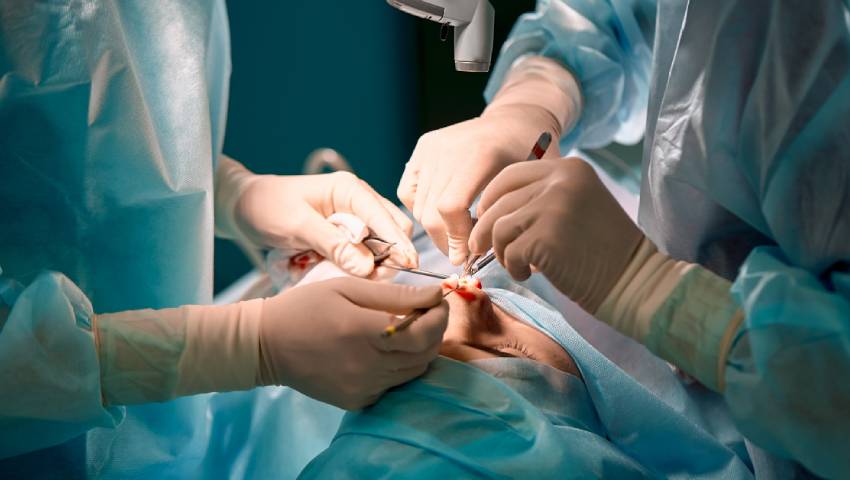
Not every medical emergency involves a road accident or a fracture. Sometimes, the danger hides in conditions people assume are “just piles.” While most hemorrhoids can be treated conservatively, certain complications demand immediate emergency trauma surgery to prevent life-threatening consequences.
If you’re searching for expert trauma surgery in Indore, Dr. Rakesh Dhupia Jain provides advanced emergency care with rapid assessment and surgical precision. Learn more about specialized
Let’s break down exactly when emergency trauma surgery becomes necessary—and when you should head straight to the ER instead of waiting.
Understanding Emergency Trauma Surgery in Hemorrhoid Complications
Emergency trauma surgery refers to urgent surgical intervention required to prevent severe complications such as tissue necrosis, uncontrolled bleeding, or systemic infection.
In hemorrhoidal disease:
- 95% of cases are managed conservatively.
- Only 5–10% require emergency surgical intervention.
- Delays in critical cases can lead to strangulation, necrosis, or massive blood loss.
The difference between discomfort and danger lies in recognizing red flags.
Incarcerated or Strangulated Internal Hemorrhoids
This is one of the most serious emergencies.
Related Post
Top Post
What Happens?
Grade IV prolapsed hemorrhoids become irreducible (cannot be pushed back inside). Blood flow gets blocked (venous obstruction), and eventually arterial supply may be compromised.
Think of it like a ring tightening around a finger—if blood can’t circulate, tissue starts dying.
Warning Signs:
- Severe, unrelenting pain
- Swelling and edema
- Bleeding
- Purple or black discoloration
- Inability to manually reduce prolapse
Timing Matters
Surgery within 6 hours significantly reduces the risk of necrosis.
Statistics:
- Around 10% of Grade IV hemorrhoids require emergency intervention.
- Success rate with immediate hemorrhoidectomy: ~95%
- Mortality in modern centers: <0.1%
Emergency hemorrhoidectomy (Milligan-Morgan or Ferguson technique) is often performed.
Acute Thrombosed External Hemorrhoids
A thrombosed hemorrhoid feels like a sudden, painful lump near the anus. It’s caused by a blood clot forming inside an external hemorrhoid.
When Is Surgery Necessary?
If:
- Pain is severe
- Symptoms began within the last 72 hours
- Pain does not respond to analgesics
- Swelling continues to worsen
Surgical Timing:
Best performed within 3 days of onset.
Outcomes:
- 95% pain relief within 24 hours
- Recurrence <5% with proper excision
Excision under local anesthesia provides immediate relief. Waiting too long reduces surgical benefit.
Massive Hemorrhoidal Bleeding
Bleeding from piles is common—but massive bleeding is not.
Emergency trauma surgery becomes necessary if:
- There is hemodynamic instability
- The patient feels dizzy or faint
- Blood loss requires transfusion
- Patient has coagulopathy (blood clotting disorder)
Profuse bleeding that soaks clothes or causes weakness is a red flag.
Procedure typically involves:
- Vessel ligation
- Emergent hemorrhoidectomy
- Stabilization with IV fluids
This is rare—but life-saving when addressed immediately.
Failed Conservative Management
Sometimes emergency trauma surgery is not about sudden bleeding—it’s about failed prior treatment.
Indications include:
- Grade III or IV hemorrhoids unresponsive to rubber band ligation
- Persistent prolapse
- Recurrent severe pain
- Mixed internal-external hemorrhoids
Meta-analyses of randomized controlled trials show that surgery is superior for persistent Grade III disease after failed office procedures.
Delaying intervention can increase complications and recurrence risk.
Clinical Decision Matrix: When Surgery Is Urgent
| Condition | Symptoms | Timing | Procedure | Success |
|---|---|---|---|---|
| Strangulated Internal | Severe pain + irreducible | <6 hours | Hemorrhoidectomy | 95% |
| Thrombosed External | Sudden lump <72h | <3 days | Excision | 95% pain relief |
| Massive Bleeding | Hemodynamic instability | Immediate | Ligation + excision | Life-saving |
| Grade IV Failed | Persistent prolapse | Urgent | Milligan-Morgan | ~90% |
Early action dramatically improves outcomes.
Preoperative Emergency Protocol
Modern emergency trauma surgery follows structured stabilization protocols:
- IV antibiotics
- Fluid resuscitation
- Spinal or general anesthesia
- Manual reduction attempt
- Hemorrhoid compression
- Use of large anoscope for safe visualization
Proper stabilization ensures complication rates remain low (2–3.6% bleeding rates reported).
Red Flags: When to Go to the ER Immediately
Do not wait if you experience:
- Cannot reduce prolapsed hemorrhoids
- Severe unrelenting pain >24 hours
- Profuse bleeding
- Fever with swelling (possible infection)
- Black or purple irreducible mass
These are not “just piles.” They are surgical emergencies.
Emergency vs Elective Surgery Outcomes
Many patients fear emergency procedures are riskier.
However, data shows:
- Operative time ~69 minutes (emergency cases)
- Complication rates comparable to elective surgery
- Hospital stay 1–2 days
- 0% mortality with proper technique
When managed by experienced surgeons, emergency trauma surgery outcomes are highly favorable.
For international surgical standards and colorectal guidelines, refer to:
Society of American Gastrointestinal and Endoscopic Surgeons (SAGES)
Why Choose Dr. Rakesh Dhupia Jain for Trauma Surgery in Indore?
Emergency situations demand speed, expertise, and decisive action.
Dr. Rakesh Dhupia Jain offers:
- Advanced trauma surgery in Indore
- Immediate emergency response
- Expertise in complicated hemorrhoidal disease
- Safe anesthesia protocols
- Low complication rates
- Evidence-based surgical techniques
If you require urgent
trauma treatment in Indore, you can rely on prompt assessment and appropriate surgical intervention at
Time matters in emergencies. Early intervention prevents irreversible damage.
Call to Action
If you’re experiencing severe pain, bleeding, or irreducible prolapse—don’t wait.
Emergency trauma surgery saves tissue, prevents complications, and restores normal function.
Contact immediately or visit the emergency department for evaluation.
Conclusion
Emergency trauma surgery becomes necessary in hemorrhoid cases when complications turn dangerous—strangulation, thrombosis, or massive bleeding.
While most hemorrhoids are managed conservatively, recognizing red flags can prevent life-threatening outcomes.
The key is early diagnosis, rapid stabilization, and expert surgical care.
When in doubt, seek medical evaluation. Acting early is always safer than waiting too long.
Frequently Asked Questions (FAQs)
Q1. When do hemorrhoids become an emergency?
Hemorrhoids become an emergency when there is severe pain, irreducible prolapse, massive bleeding, or signs of strangulation.
Q2. What is strangulated hemorrhoid surgery?
It is an emergency hemorrhoidectomy performed when blood supply is compromised in prolapsed hemorrhoids.
Q3. Can thrombosed hemorrhoids require surgery?
Yes, if severe pain occurs within 72 hours, excision provides rapid relief.
Q4. Is emergency hemorrhoid surgery safe?
Yes, when performed in a stabilized setting by experienced surgeons, complication rates are low.
Q5. How long is recovery after emergency hemorrhoid surgery?
Most patients stay 1–2 days in hospital and recover within 2–3 weeks.